The Ultimate Kitchen Knife Guide: Different Types of Knives and Their Uses
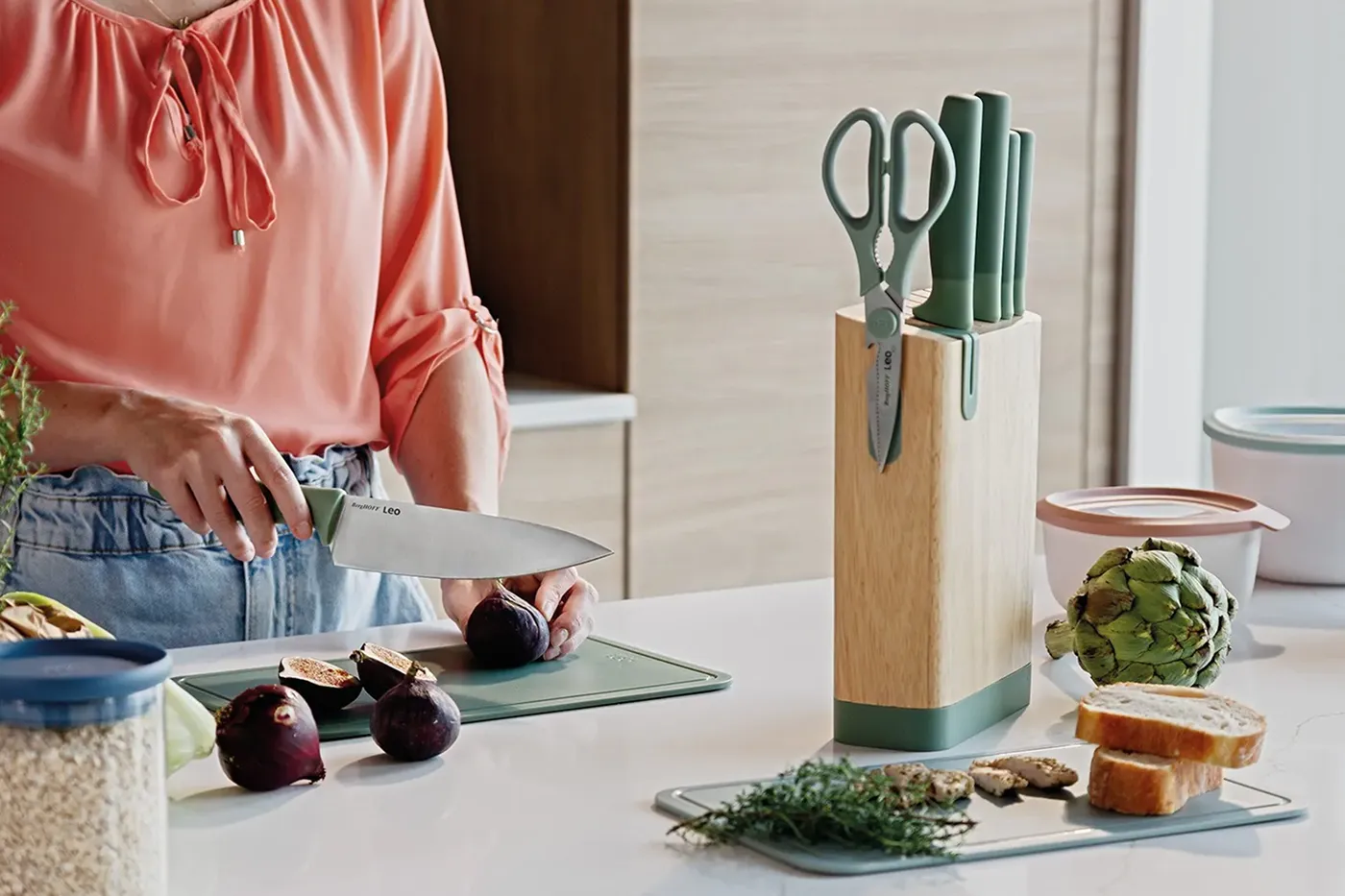
The most important tools in your kitchen are your kitchen knives. But when there are so many different types of knives it can sometimes be confusing to know which ones you need, even for experienced home cooks.
Ever wondered why a cheese knife has holes in it? What’s different about Japanese-style knives compared to Western-style chef’s knives? Or what blade shape is best for crushing garlic? Don’t worry, because we’re here to break down the most widely used types of knives, explain their design and tell you about their common uses.
So read on to find your perfect partner for chopping, slicing and dicing!
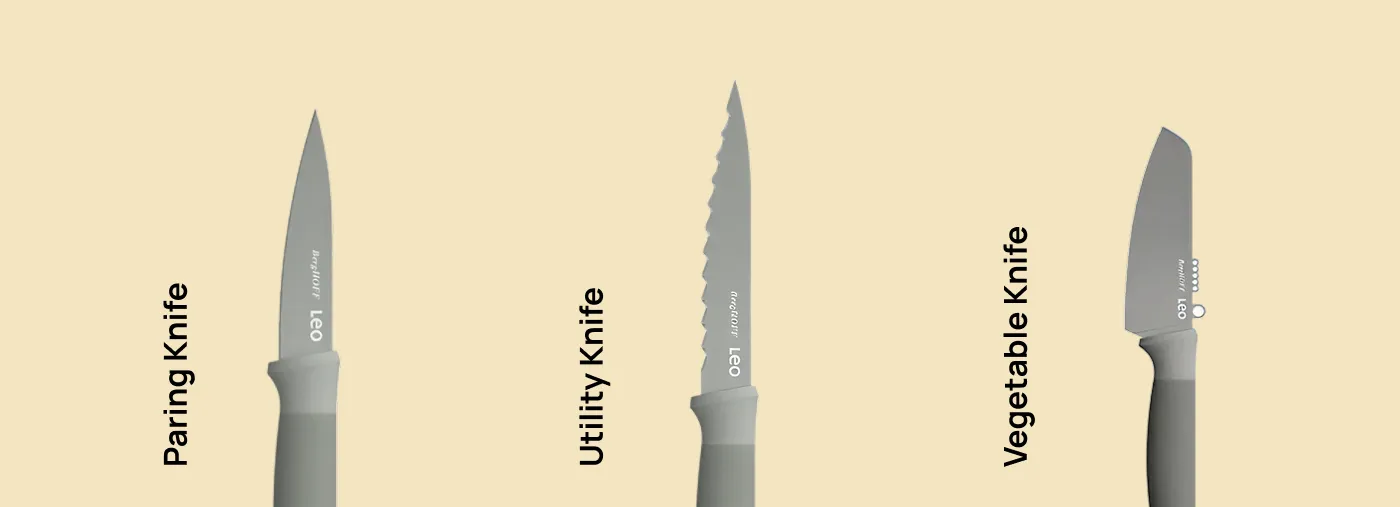
Paring Knife
A paring knife can be described as a small, lightweight knife with a straight cutting edge. It usually measures between 6 and 10 cm (2.5 and 4″), including blade length. This all-purpose knife is ideal for peeling and other small food prep tasks.
(Serrated) Utility Knife
With a size between a paring knife and a chef’s knife, between 10 and 18cm (4 and 7″), combined with a straight cutting edge, the utility knife is suitable for all general cutting tasks. A serrated utility knife is especially useful for slicing bread, meats or other foods with a hard crust or outer skin.
Vegetable Knife
A vegetable knife is designed to cut, dice, slice and chop vegetables, herbs or fruit, but not to cut meat. The blade of this knife is broad, light and has a rather thinner blade allowing you to cut cleaner. Most vegetable knives are 11 or 12 cm (4.5 or 5″) long.
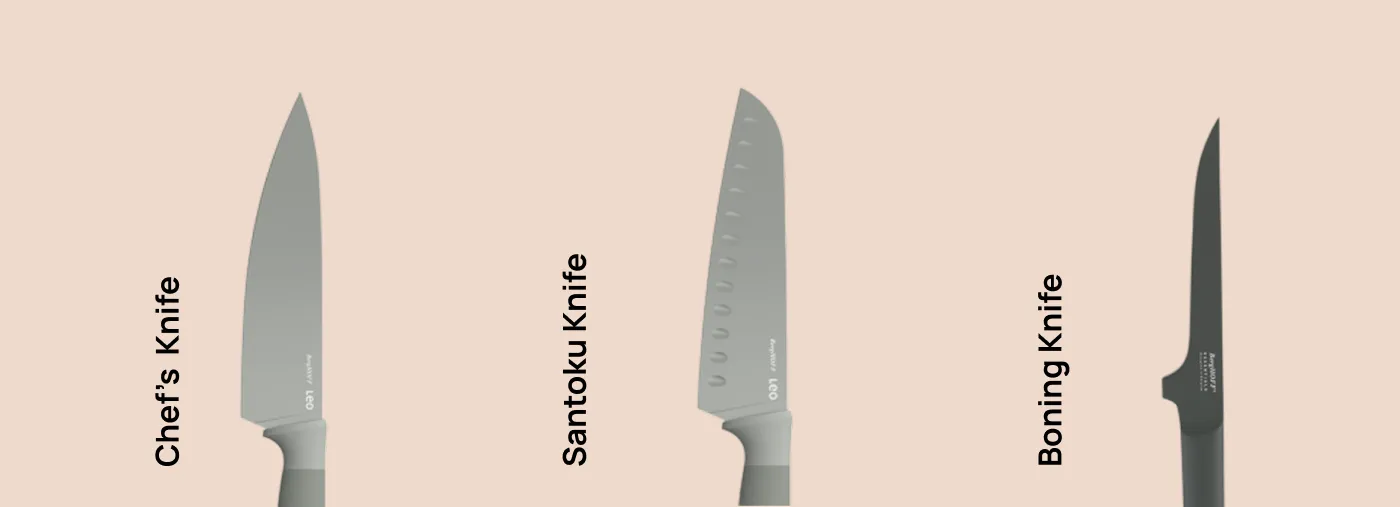
Chef's Knife
A chef’s knife is usually between 13 and 30 cm (5 and 12″) long. The chef’s knife is the most commonly used knife in the kitchen for all kinds of tasks. With Western-style knives, there is an upward curved tip that allows the knife to be tilted and for easy cutting, in a rocking motion, on a chopping board. The wide, heavy blade can make a chef’s knife also suitable as a chopper, and is ideal for crushing garlic.
Santoku Knife
A Japanese-style knife of about 12 to 19 cm long (5 to 7.5″) with a straighter edge than a chef’s knife. The straight edge encourages precision cutting and slicing. It’s an all-rounder for a variety of tasks. The wide blade allows for some typical activities such as crushing garlic and scooping up the chopped ingredients. Most Santoku knives also come with dimples on the side of the blade to prevent food from sticking.
Boning Knife
The opposite of a cleaver or chopper, the boning knife has a thin, flexible blade of 10 to 16 cm (4 to 6.5″). Professional chefs rely on these to remove the bones from cuts of meat. The thin blade shape allows it to get into small spaces, making it more equipped for the job than a typical chef’s knife. It is often available in a flexible or stiff version. The flexible version is ideal for poultry and fish, while the inflexible version is good for beef and pork.
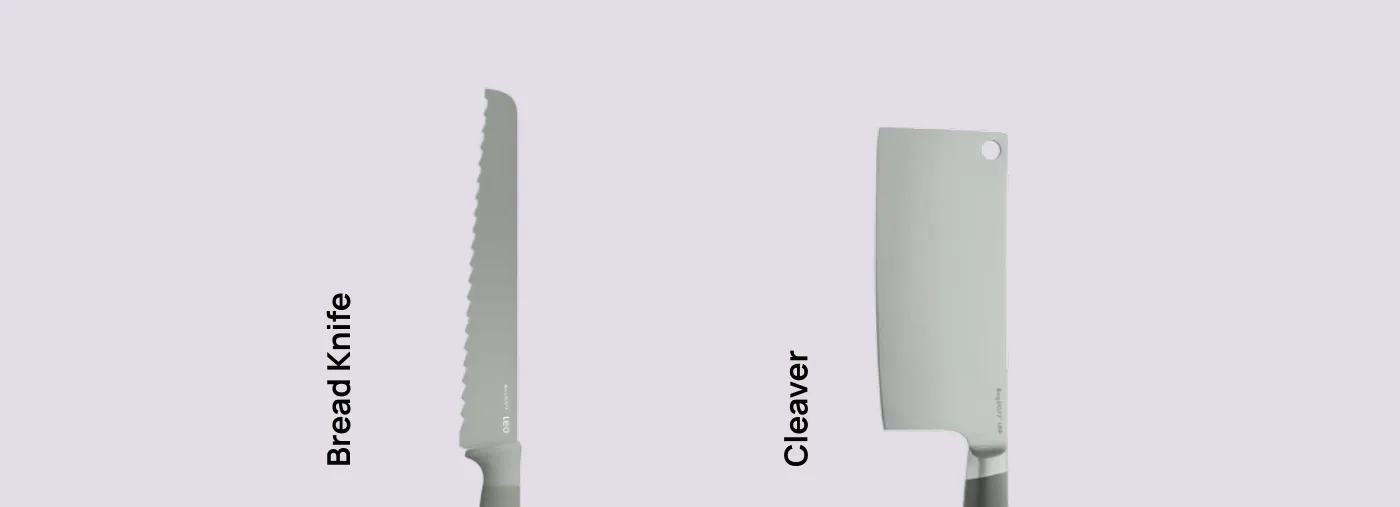
Bread Knife
A bread knife is a fairly large knife between 15 and 25 cm (6 and 10″) with a serrated blade. It is used for food that is hard on the outside and soft in the middle, such as bread and other bakery goods. The serrated blade makes it easier to slice through bread without squashing it.
Chopper/ Cleaver
This 15 to 18 cm (6 to 7″) long knife has a wide, rectangular, thick blade. It’s made for cutting large pieces of meat and chopping bones. They are typically used by butchers, allowing them to easily cut through tougher materials.
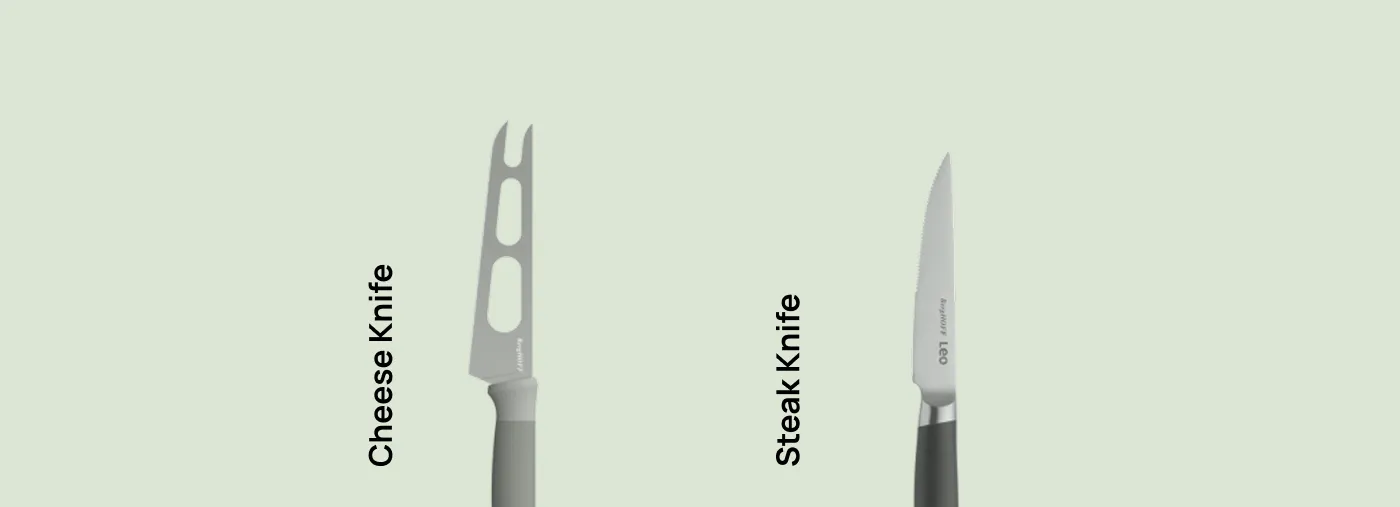
Cheese Knife
A characteristic feature of a cheese knife is the upwardly curved tip, which makes serving easier. For soft cheeses the cheese knife has a serrated blade with holes to prevent the cheese from sticking. Hard cheeses require a firm blade to cut through the toughest varieties.
Steak Knife
While other knives are used in the kitchen to prepare your meal, steak knives are designed to be used at the table when steak or other meats are being served. The serrated edge makes cutting through meat far easier than using a traditional cutlery knife.
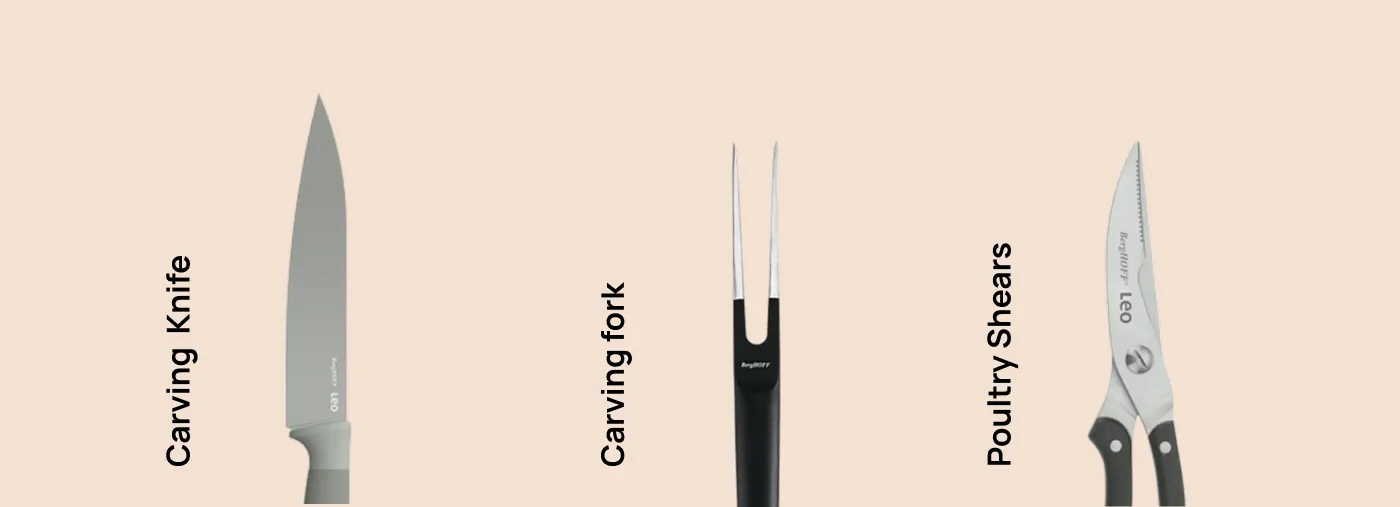
Carving Knife
The carving knife is a large knife between 19 and 38 cm (7.5 and 15″) and is used to cut thin slices of meat. Carving knives are generally wider than slicing knives. It’s typically best to combine a carving knife with a carving fork.
Carving Fork
When slicing poultry, roast ham or other types of meat, a carving fork is used to hold the meat securely in place while cutting the meat with the carving knife. The carving fork makes sure you don’t have to touch the meat and it keeps your hands away from the sharp blades of the carving knife. Most carving forks are between 17 and 19cm long (7 and 7.5″).
Poultry Shears
Poultry shears are specially designed to cut through bone, chicken skin and other tough materials. These shears can be used as general purpose kitchen shears, suited for a wide variety of heavy duty kitchen tasks.
Which Knife Do You Need?
Choosing the right kitchen knife can make food preparation faster, safer and more enjoyable. While a chef’s knife or Santoku knife will handle most everyday tasks, adding a few specialist knives such as a paring knife, bread knife or carving knife can help you achieve better results in the kitchen.
Whether you’re preparing simple family meals or experimenting with new recipes, investing in quality kitchen knives and using the right blade for the job will help you to get the most from your cooking.
Optional Extras
That’s your knife collection sorted, but what about other things you might need? A knife block isn’t just an attractive kitchen accessory, it’s a useful storage option that keeps blades safe. A knife sharpener is also an essential bit of kit that will extend the life of your blades and make cooking easier.
The right cutting board will make things easier as well and if you pick one made from the right materials, they can also help to prevent damage to your kitchen tools.
See what we're cooking up.
Bringing you the latest recipes for inspiration
... let us know how you get on!
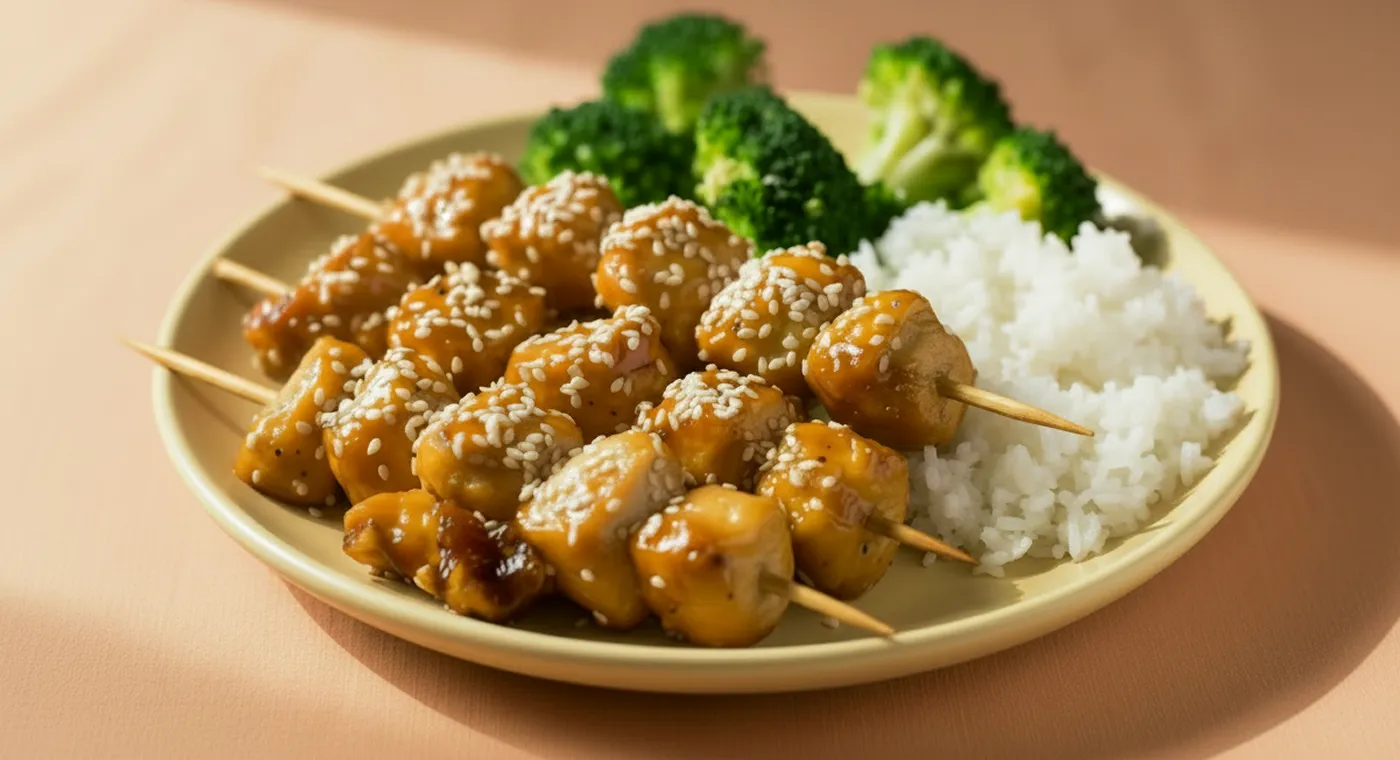
5 August 2026
Bang Bang Chicken Skewers (Sichuan-inspired)
Our take on the Chinese classic. This bang bang chicken recipe is perfect for a weeknight meal or a weekend BBQ.
Read More
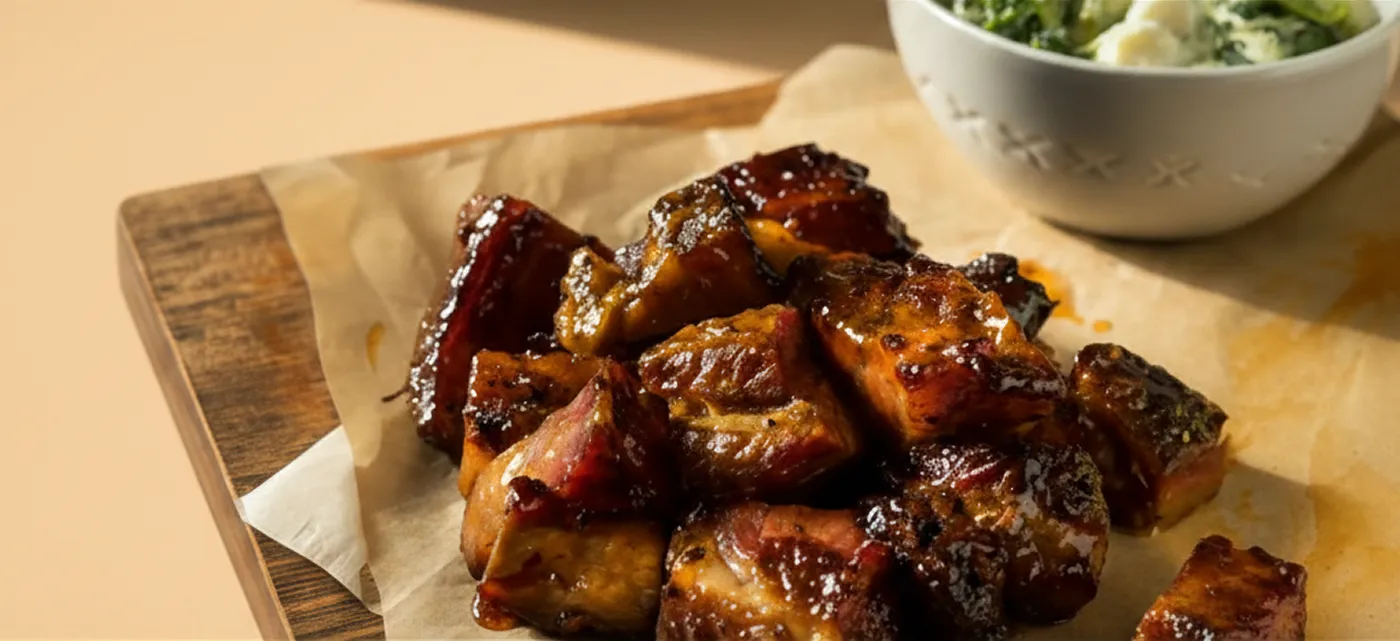
24 July 2026
Teriyaki Pork Belly Donburi Bowl
Making teriyaki pork is easier than you would think. A few simple steps and you’ve got a sticky, sweet and salty dish.
Read More

10 July 2026
Viral Dot Cake Recipe
Here’s a simple, classic french dessert recipe for Tarte Tatin aux Abricots, ideal for home bakers to cook in the sunshine this summer!
Read More